What Is Roof Underlayment? A Complete Guide for Northern Utah Homeowners
Roof underlayment is your home's hidden first defense. Learn what goes under roof shingles, why the ice and water barrier matters in Utah, and how to choose right.
Most homeowners can identify shingles on sight. Fewer can explain what goes under roof shingles—or why those hidden layers matter just as much as the visible surface. Roof underlayment is one of the most critical components of any roofing system, yet it rarely gets the attention it deserves until something goes wrong.
For Northern Utah homeowners navigating heavy snow loads, freeze-thaw cycles, and wind-driven rain, understanding what roof underlayment is and how it works can make a meaningful difference in the long-term performance of your roof. This guide breaks down the purpose, types, and importance of underlayment, with specific attention to how Utah’s climate affects material selection and installation decisions.
What Is Roof Underlayment and What Does It Do?
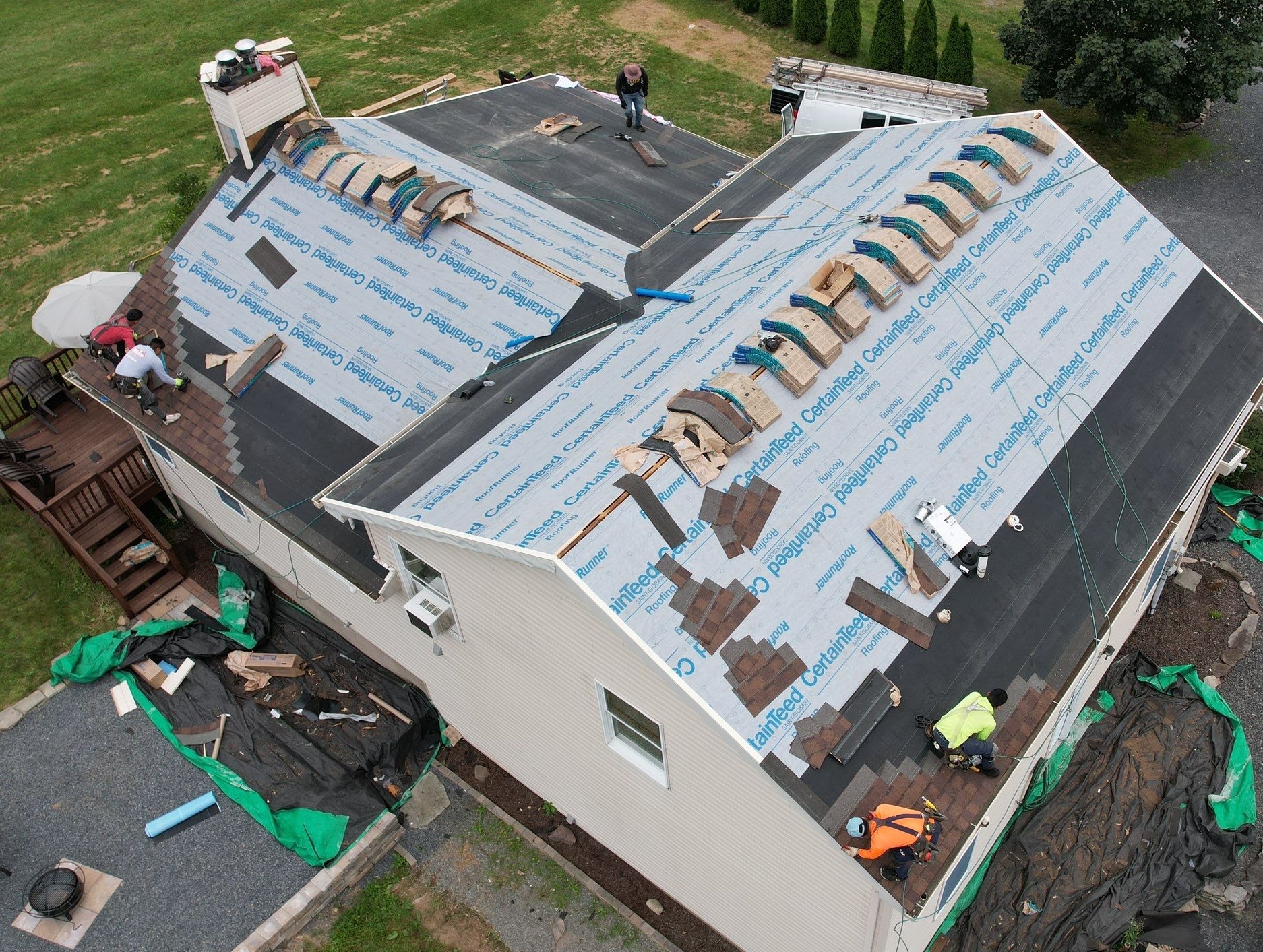
Roof underlayment is a protective layer installed directly on top of the roof deck—the plywood or OSB sheathing—and beneath the outer roofing material. In plain terms, it’s a secondary weather barrier. If wind, rain, or snowmelt gets past the shingles, the underlayment is the next line of defense preventing moisture from reaching the structural decking and the interior of your home.
More Than Just a Backup Layer
Underlayment on a roof plays several roles at once:
• It acts as a temporary weather barrier during construction, before shingles are installed
• It adds moisture resistance against wind-driven rain and ice dam meltwater
• It creates a smoother, more consistent surface for shingle installation—improving adhesion and overall roof appearance
For Northern Utah homes, where roofing systems face extreme seasonal stress, that secondary barrier isn’t optional. It’s essential infrastructure.
What Goes Under Roof Shingles: The Full Layering System
To really understand what goes under roof shingles, you need to look at the complete roof assembly from the decking up. The layers, in order from bottom to top, are typically:
• Roof deck (plywood or OSB sheathing)—the structural base
• Roof underlayment—covering the entire deck surface as a moisture barrier
• Ice and water barrier—a self-adhering membrane installed in critical areas
• Shingles—the primary weather defense and the finish layer you can see from the street
Each layer has a specific job, and cutting corners on any one of them compromises the entire system. Homeowners who understand this layering are better equipped to evaluate contractor proposals and ask the right questions about material quality.
Types of Roof Underlayment
Not all underlayment is created equal. The right choice depends on your climate, roof design, and project budget. There are three main categories worth knowing.
Asphalt-Saturated Felt
Often called felt paper or tar paper, asphalt-saturated felt has been the traditional choice for decades. It comes in 15-pound and 30-pound weights, with 30-pound offering better durability and moisture resistance. It still meets code requirements and is widely used—but it does have limitations. Felt paper can tear during installation, absorbs moisture if left exposed for too long, and tends to become brittle over time in extreme climates.
Synthetic Underlayment
Synthetic products have largely replaced felt in modern roofing installations, and for good reason. Made from woven or spun polyethylene or polypropylene, they’re lighter, stronger, and significantly more resistant to moisture and UV exposure. They lie flatter on the deck, which supports better shingle adhesion and contributes to the long-term durability of roofing shingles. For Northern Utah’s demanding weather, synthetic underlayment is the standard among quality-focused contractors.
Rubberized Asphalt Membrane
This is a premium, self-adhering product used primarily in high-risk areas rather than across the full roof surface. It bonds directly to the deck, creating a watertight seal that holds up even when water sits on the surface for extended periods. This is the material most commonly used as a roof ice and water barrier—and in Northern Utah, it’s not a luxury. It’s a necessity.
Why the Roof Ice and Water Barrier Matters in Utah
Ice dams are one of the most common causes of roof damage along the Wasatch Front. When heat escaping through the attic melts snow on the upper sections of the roof, that meltwater flows down toward the colder eaves and refreezes—creating a dam that forces water back underneath the shingles. Without proper protection, trapped water seeps into the deck, insulation, and eventually your home’s interior.
A roof ice and water barrier is specifically designed to stop this. Installed along the eaves, in valleys, and around roof penetrations, it self-adheres to create a waterproof seal that holds up through repeated freeze-thaw cycles.
Code Minimums vs. Real-World Performance
Utah building codes require ice and water barrier installation in vulnerable areas, but experienced contractors often extend coverage beyond those minimums in regions with heavy snowfall. This is one area where what goes under roof shingles directly determines how your home performs through a Northern Utah winter—and the upgrade cost is modest compared to the protection it provides.
How Underlayment Affects the Durability of Roofing Shingles
Underlayment doesn’t just protect against leaks—it directly influences how long your shingles last and how well they perform throughout their service life.
Quality underlayment on a roof creates a stable, consistent surface for shingle installation. When the deck is smooth and properly covered, shingles lie flat, adhere correctly, and resist wind uplift more effectively. When underlayment is poor or degraded, moisture can reach the deck from below, causing the sheathing to swell, warp, or rot. As the surface deteriorates, shingles lose their solid foundation and begin to buckle, crack, or lift.
The Hidden Reason Roofs Age Prematurely
This cascading failure is one of the most underappreciated causes of early roof replacement. It’s not always the shingles themselves that fail first—it’s the layers beneath them. For homeowners focused on maximizing the durability of roofing shingles, quality underlayment is one of the highest-return investments in any roofing project.
Synthetic products have a specific advantage here: they resist moisture absorption far better than traditional felt, keeping the deck drier and more dimensionally stable over the long term. In a climate with extreme temperature swings and prolonged snow cover, that resistance adds up to years of additional service life.
Roof Underlayment and Building Code Requirements in Utah
Utah building codes require underlayment on virtually all steep-slope roofing projects. The International Residential Code, adopted in Utah with local amendments, sets minimum underlayment requirements based on roof slope, material type, and geographic risk. In snow country—which covers most of Northern Utah—additional requirements apply for ice barrier installation along eaves and in roof valleys.
Code Is the Floor, Not the Ceiling
Meeting code is a starting point, not a performance target. Code-minimum installations typically use a single layer of 15-pound felt or an approved synthetic equivalent, which is adequate in mild conditions. But for the weather Northern Utah roofs actually face, many contractors recommend upgrading to heavier synthetic products and extending ice and water barrier coverage beyond the required minimums.
Those upgrades add relatively little to the total project cost while meaningfully improving long-term roof performance and the durability of roofing shingles over the life of the roof.
Common Underlayment Mistakes That Shorten Roof Life
Even when quality materials are selected, installation errors can undermine the entire system. A few of the most common:
Inadequate Overlap
Manufacturers specify minimum overlap requirements—typically four inches on horizontal seams and six inches on vertical seams. Rushed installations sometimes cut those margins, creating pathways for wind-driven moisture to work its way in.
Improper Fastening
Underlayment that isn’t adequately secured to the deck can shift, wrinkle, or tear before shingles are installed. In Northern Utah, where roofing crews often contend with wind on the job, proper fastening is especially critical to maintaining that smooth, stable surface shingles need.
Undersized Ice and Water Barrier Coverage
Skipping or downsizing the ice and water barrier is a mistake that often doesn’t reveal itself until the first serious winter. Code requires coverage extending at least 24 inches past the interior wall line, but on homes with low-slope sections, complex roof geometries, or a history of ice damming, expanded coverage is a worthwhile call. What goes under roof shingles in these vulnerable areas can make or break how a roof handles Utah winters over the long haul.
Choosing the Right Underlayment for a Northern Utah Roof
For most residential roofing projects along the Wasatch Front, the current best practice combines synthetic underlayment across the full roof surface with a rubberized asphalt ice and water barrier in critical zones. This pairing provides reliable moisture protection, supports long-term shingle performance, and addresses the specific climate challenges Northern Utah roofs face year-round.
What to Ask Your Contractor
When reviewing roofing proposals, ask specifically about underlayment—the product name, weight, and coverage plan—rather than accepting a generic description. The difference between a quality synthetic product and basic felt paper may not be visible on the finished roof, but it shows up in performance over the years and decades that follow.
The Layers You Can’t See Are Doing the Most Work
Understanding what roof underlayment is—and why it matters—gives you a genuine advantage when making one of the most important maintenance decisions a homeowner faces. The layers beneath the shingles don’t attract much attention, but they’re quietly doing essential work: keeping moisture out, stabilizing the shingle surface, and protecting the structural integrity of everything underneath.
For Northern Utah properties, where roofing systems earn every year of their service life, quality underlayment isn’t an upgrade. It’s a baseline requirement—and knowing that puts you in a much better position to protect your home.